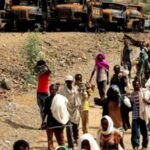
In low-income settings, poverty and mental health are often locked in a vicious cycle. Poor mental health can impair decision-making and reduce productivity, while the stresses of poverty—financial insecurity, food shortages, and environmental hazards—further exacerbate mental illness (Ridley et al 2020). Armed conflict can intensify this cycle: violence and displacement amplify trauma, while the resulting […]
The impact of a nutrition-sensitive graduation model on child nutrition: Experimental evidence from Ethiopia
This brief reports on a three-arm cluster randomized controlled trial of 3,015 households evaluating the effectiveness of SPIR II, a nutrition-sensitive graduation model implemented in Ethiopia. The full treatment package—combining nutrition-focused behavior change communication (BCC), village economics and savings associations, monthly maternal cash transfers of US$20, and a one-time livelihood grant of US$300—generates large, sustained […]
Can simpler, cheaper poverty graduation programs still deliver? Evidence from Ethiopia
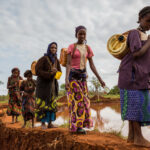
A randomized evaluation of a lower-cost poverty graduation-style program in rural Ethiopia finds modest gains in savings and livestock income but no sustained improvements in consumption or food security, suggesting that smaller cash transfers and lighter support may be insufficient to help extremely poor households escape poverty, particularly in shock-prone settings. A long-running debate in […]
Beyond the 24-Hour Recall: Aligning Dietary Diversity Metrics with Nutrient Physiology

https://doi.org/10.1016/j.tjnut.2026.101523 The Journal of Nutrition: Volume 156, Issue 6, June 2026, 101523 Taddese Zerfu , Amare Abera Tareke , Dawit Alemayehu Chekol Abstract Dietary diversity indicators, such as the Minimum Dietary Diversity for Women (MDD-W), are widely used to assess diet quality in low- and middle-income countries. These metrics typically rely on 24-h recall data to approximate micronutrient adequacy. Although repeated […]
The future in mind: Aspirations and long-term outcomes in rural Ethiopia
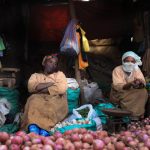
Aspirations may condition the future-oriented choices of individuals and thus may play a role in the persistence of poverty or the effort to break out of it. We run a randomized controlled trial in remote, rural Ethiopia to explore this and evaluate an intervention that aims to change how poor people perceive their future opportunities, […]
- « Previous Page
- 1
- 2
- 3
- 4
- 5
- 6
- …
- 128
- Next Page »