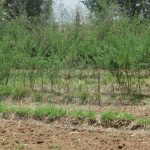
The HER+ Sustainable Land Management Study is a randomized controlled trial evaluating a bundled intervention that provides training and inputs (including 4-6 fruit tree seedlings, vegetable seeds, and tools) to encourage extremely poor rural Ethiopian households to adopt three complementary sustainable land management (SLM) practices: fruit tree planting, composting, and home gardening. The baseline survey […]
Modeling the economywide effects of water and energy interventions in the face of climate shocks in Ethiopia
The Ethiopian economy relies heavily on rainfed agriculture for income generation, export earnings, and rural livelihoods. However, projections from climate scenarios predict high frequency and intense extreme agro-climatic events, posing significant and growing risks to Ethiopia’s agri-food system and overall economy. This study evaluates the economic impacts of recurrent climate shocks on Ethiopia through 2040 […]
Replication Data for “How Agri-Food Value Chain Employment and Compensation Evolve with Structural Transformation”

This dataset contains replication materials for the results presented in the article "How Agri-Food Value Chain Employment and Compensation Evolve with Structural Transformation." It includes instructions, raw data (excluding proprietary components), and code used to reproduce the data consolidation process and estimation results. The analysis relies on raw Eora Multi-Region Input-Output (MRIO) data, which are […]
Contributions of District Health Information Software 2 (DHIS2) to maternal and child health service performance in Ethiopia: An interrupted time series mixed-methods study
Background The District Health Information Software 2 (DHIS2) is the primary digital platform for health management information systems (HMIS) in Ethiopia, aligning with the nation’s digitization strategy. Despite widespread implementation, its effectiveness on key health service indicators, particularly maternal and child health (MCH) services, remain unclear. Objective This study aimed to evaluate the contribution of DHIS2 […]
Micro-, Small and Medium-sized Enterprises Day: Lessons from research on the food environment in Bangladesh, Ethiopia, and Viet Nam
Improving diets is a key element of food systems transformation, which in turn depends on the availability and affordability of nutritious foods. Micro-, small and medium-sized enterprises (MSMEs) play a crucial role in providing both food and employment in many low-income countries—making them a key target for food systems transformation policies. Making such interventions work […]
- « Previous Page
- 1
- …
- 10
- 11
- 12
- 13
- 14
- …
- 128
- Next Page »