
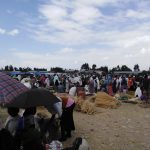
Re-posted from Aliveandthrive. Many Ethiopians have little variety in their diets because foods such as meats and poultry and some fruits and vegetables are unavailable or too expensive, according to new research. Researchers looked at consumption, production, availability, and affordability in six regions of Ethiopia, to understand how well the regions’ food systems—from farm inputs […]
The rapid transformation of food supply chains in developing and emerging economies with implications for farmers and consumers
Population growth alone dictates that global food supplies must increase by over 50% in coming decades. Advances in technology offer an array of opportunities to meet this demand, but history shows that these can be fully realised only within an enabling policy environment. Sustaining Global Food Security makes a compelling case that recent technological breakthroughs […]
To adopt the EAT-Lancet diet, food systems need to be fixed first

A new article on devex explores the varying criticism of the EAT-Lancet reference diet which according to a new research is too costly for nearly 1.6 billion people in the world, Headlines zeroed in on the diet's unaffordability as evidence of its impracticality. Read more.
SOME LESSONS FROM A LIFE IN FOOD POLICY

Shenggen Fan reflects on his years as IFPRI’s director general and how his own life illustrates the potential for policy to improve livelihoods. Read more.
Dataset: Improving the Evidence and Policies for Better Performing Livestock Systems in Ethiopia
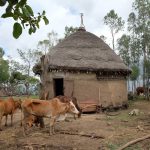
Well-performing livestock systems matter enormously for both income and better nutritional outcomes among smallholder farmers in developing countries. The International Food Policy Research Institute (IFPRI), the Ethiopian Institute for Agricultural Research (EIAR), and policy Studies Institute (PSI) collaborated on a project to improve the evidence and policies for better performing livestock systems in Ethiopia and […]