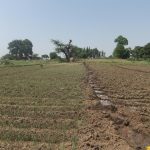
Improving household resilience is becoming one of the key focus and target of social protection programs in Africa. However, there is surprisingly little direct evidence of the impacts of social protection programs on household resilience measures. We use five rounds of panel data to examine rural households’ resilience outcomes associated with participation in Ethiopia’s Productive […]
Measuring consumption over the phone: Evidence from a survey experiment in urban Ethiopia

The paucity of reliable and timely household consumption data in many low- and middle-income countries have made it practically impossible to assess how global poverty has evolved during the COVID-19 pandemic. Despite the burst of phone surveys, there has been few attempts to collect household consumption data. To test the feasibility of collecting consumption data […]
Impact evaluation of the strengthen PSNP4 institutions and resilience (SPIR) development food security activity (DFSA): Endline report

The Strengthen PSNP4 Institutions and Resilience (SPIR) Development Food Security Activity (DFSA) in Ethiopia is a five-year project (2016-2021) supporting implementation of the fourth phase of the Productive Safety Net Programme (PSNP4) as well as providing complementary livelihood, nutrition, gender and climate resilience activities to strengthen the program and expand its impacts. The main objectives […]
Labor-related knowledge transfers from Chinese foreign direct investment in Ethiopia and Tanzania

We examine worker training by Chinese manufacturing firms using nationally representative firm-level data from both Ethiopia and Tanzania. While Chinese firms make up a relatively small portion of the manufacturing industry in both Ethiopia and Tanzania, at the firm-level they contribute significantly to both domestic employment and labor training. In both countries more than 85 […]
Evidence on trends in wellbeing of rural Ethiopian households during the COVID-19 pandemic
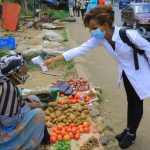
The COVID-19 pandemic continues to be a significant threat to public health throughout most of the world as the coronavirus continues to spread, mostly unchecked by limited availability of vaccines, and largescale surges in cases are fed by new variants of the virus. In Ethiopia, surges in COVID-19 cases after months of apparently low levels […]
- « Previous Page
- 1
- …
- 47
- 48
- 49
- 50
- 51
- …
- 124
- Next Page »