Journal Article Telescoping errors occur if survey respondents misdate events from outside the reference period and include them in their recall. Concern about telescoping influenced the design of early Living Standards Measurement Study (LSMS) surveys, which used a two-visit interview format to bound food consumption recall. This design fell out of favor although not for […]
Measuring consumption over the phone: Evidence from a survey experiment in urban Ethiopia
Working Paper The paucity of reliable, timely household consumption data in many low- and middle-income countries has made it difficult to assess how global poverty has evolved during the COVID-19 pandemic. Standard poverty measurement requires collecting household consumption data, which is rarely done by phone. To test the feasibility of collecting consumption data over the […]
Accelerating technical change through ICT: Evidence from a video-mediated extension experiment in Ethiopia
Journal Article Despite enthusiasm around applications of information and communications technologies (ICTs) to smallholder agriculture in many lower-income countries, there are still many questions on the effectiveness of ICT-based approaches. This study assesses the impacts of video-mediated agricultural extension service provision on farmers’ adoption of improved agricultural technologies and practices in Ethiopia using data from […]
Respondent fatigue reduces dietary diversity scores reported from mobile phone surveys in Ethiopia during the COVID-19 Pandemic
Article in press The computer-assisted telephone interview (CATI) has been used extensively during the COVID-19 pandemic, but the effects of respondent fatigue during these interviews on responses to questions about diet are unknown. Objectives: We designed an experiment that randomized the placement of a survey module on the dietary diversity of rural Ethiopian women and […]
Key stakeholders and actions to address Lake Beseka’s challenges in Ethiopia: A social network approach
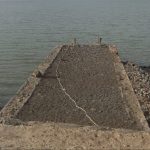
IFPRI Discussion Paper 02135 Lake Beseka is a shallow, saline, endorheic lake in the East African Rift Valley of Ethiopia that has dramatically grown in size due to large-scale irrigation development in its catchment area. Recent artificial connections of the lake with the Awash River system to contain lake size have led to a series […]
- « Previous Page
- 1
- …
- 39
- 40
- 41
- 42
- 43
- …
- 124
- Next Page »