Background Governments around the world collect food price data on a frequent basis, often monthly, for the purpose of monitoring inflation. These routine economic data can be used with a nutrition-sensitive lens for understanding economic access to a healthy diet. The United Nations Food and Agriculture Organization has adopted the cost and affordability of a […]
Africa’s manufacturing puzzle: Evidence from Tanzanian and Ethiopian firms
Recent growth accelerations in Africa are characterized by increasing productivity in agriculture, a declining share of the labor force employed in agriculture and declining productivity in modern sectors such as manufacturing. To shed light on this puzzle, we disaggregate firms in the manufacturing sector by size using two newly created panels of manufacturing firms, one […]
Beyond the Health Extension Program: Developing a focused approach to improve nutrition in Ethiopia
The Ethiopian Health Extension Program (HEP) has long been a cornerstone of the country’s public health strategy, especially in rural and underserved areas. Launched with high hopes in 2003, the HEP aimed to advance health-related Millennium Development Goals (MDGs) and provide essential health services to communities with limited access. From its early years, the HEP […]
Low awareness and affordability are major drivers of low consumption of animal‐source foods among children in Northern Ethiopia: A mixed‐methods study

Animal-source foods (ASFs), contain high amounts of essential nutrients that are readily absorbed by the body. However, children in resource-constrained settings often have limited access to these nutritious foods. This study aimed to investigate the reasons for the low consumption of ASFs among children in the Amhara region of Ethiopia. A community-based mixed-methods study was […]
Beyond the Health Extension Program: Developing a focused approach to improve nutrition in Ethiopia
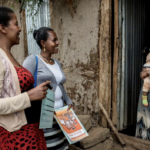
The Ethiopian Health Extension Program (HEP) has long been a cornerstone of the country’s public health strategy, especially in rural and underserved areas. Launched with high hopes in 2003, the HEP aimed to advance health-related Millennium Development Goals (MDGs) and provide essential health services to communities with limited access. Read more>>
- « Previous Page
- 1
- …
- 20
- 21
- 22
- 23
- 24
- …
- 124
- Next Page »