A half-day seminar on "Scaling Psychological Support After Conflict: Evidence from Group Problem Management Plus (gPM+) in Tigray" was held on July 21, 2026, at the ILRI Campus in Addis Ababa. The event was co-organized by IFPRI, World Vision, and Northwestern University, bringing together researchers, development practitioners, and mental health experts to discuss evidence-based approaches to improving mental health services in conflict-affected communities. 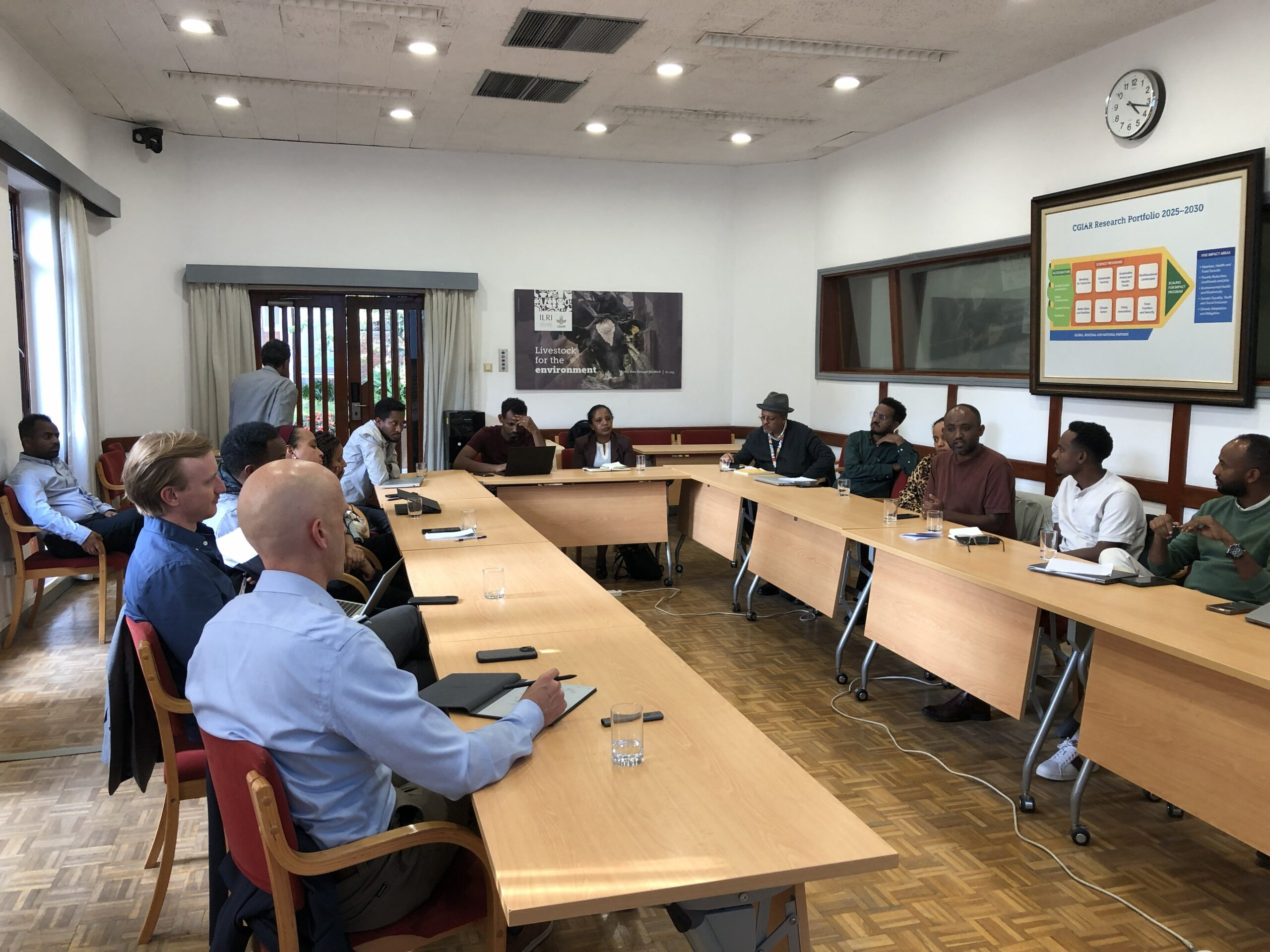
During the seminar, Michael Mulford presented findings from the study on the implementation and impact of Group Problem Management Plus (gPM+) in Tigray. The research found that both Health Extension Workers (HEWs) and Lay Facilitators (LFs) significantly reduced symptoms of poor mental health in the short term. Female lay facilitators achieved even greater short-term improvements than HEWs, while women experienced benefits that were three to four times greater than those observed among men. The intervention had the strongest effects on reducing depression and anxiety, with more modest improvements in stress and post-traumatic stress disorder (PTSD). However, these positive mental health impacts largely diminished by the 12-month follow-up as individuals in the control group gradually recovered over time.
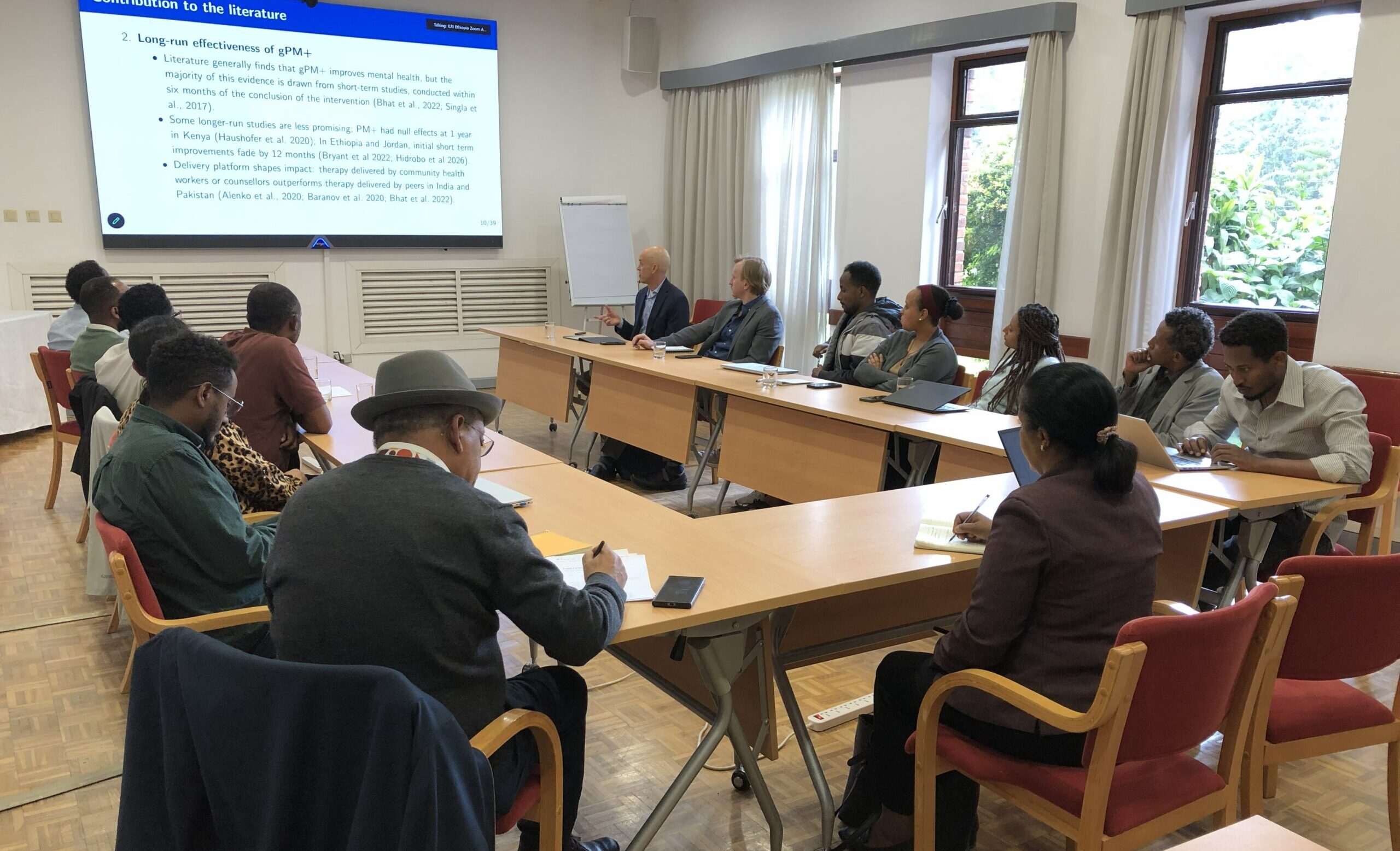 The seminar also featured reflections from Dr. Tewodros of the Ministry of Health, who shared policy implications and practical insights drawn from the study's design, implementation, and findings. Drawing on his experience coordinating the Mental Health Technical Working Group in Tigray, he discussed the operational challenges of delivering mental health services in conflict settings, emphasized the importance of integrating mental health interventions into existing health systems, and highlighted the value of strong coordination among government and development partners to ensure effective implementation and sustainability.
The discussion concluded that while Group Problem Management Plus (gPM+) is an effective intervention for improving mental health in the aftermath of conflict, its benefits are strengthened when combined with economic support. The evidence showed that therapy alone produced limited long-term mental health gains, cash assistance alone improved economic well-being, and the combination of cash transfers with gPM+ generated the greatest improvements in both psychosocial and economic outcomes. Nevertheless, the study also demonstrated that continued insecurity and conflict can reduce the effectiveness and sustainability of these interventions, underscoring the need for integrated, long-term support for conflict-affected populations.