The 23rd International Conference on the Ethiopian Economy brought together Ethiopia's leading economists, policymakers, researchers, development practitioners, and academics on July 17–18, 2026, at the Ethiopian Economics Association (EEA) Conference Hall in Addis Ababa. Co-organized by the Ethiopian Economics Association (EEA), CGIAR–IFPRI, and other partners, 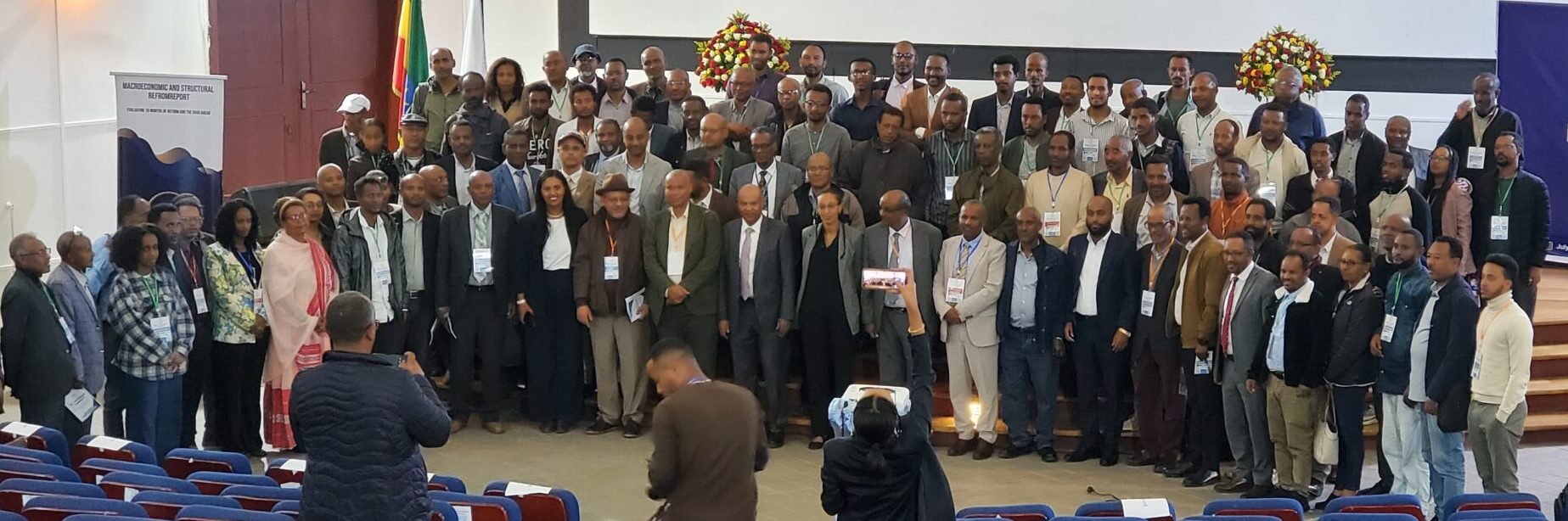 the annual conference served as a premier platform for exchanging evidence, ideas, and policy solutions to address Ethiopia's evolving economic challenges.
A total of 511 participants (433 men and 78 women) attended the two-day conference under the theme "The New Global Reality: Rethinking Development, Resilience, and Economic Transformation." Against a backdrop of shifting global economic conditions, climate change, geopolitical uncertainty, and domestic reform, participants explored how Ethiopia can strengthen resilience while pursuing inclusive and sustainable economic transformation.
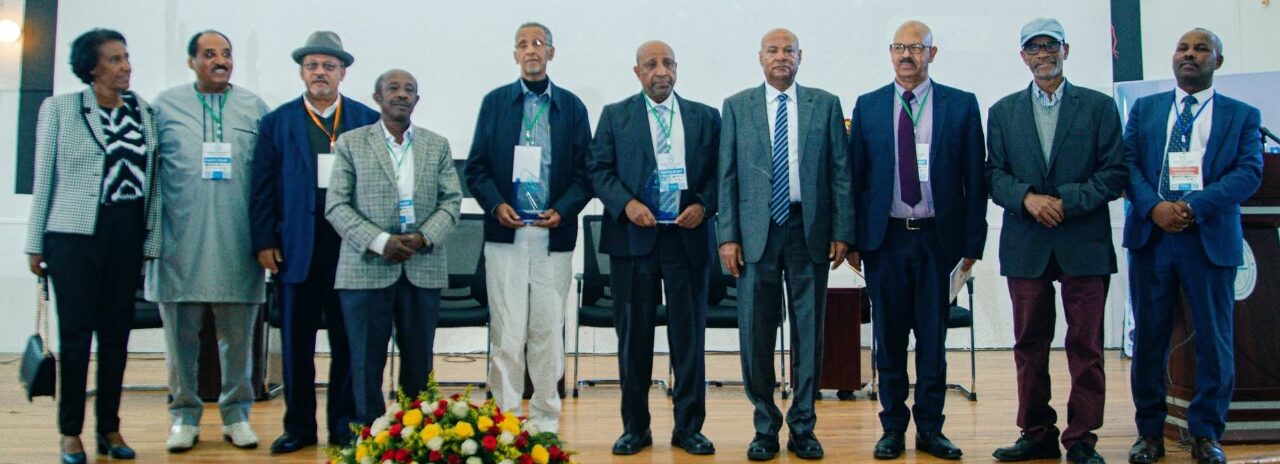 The conference officially opened with welcoming remarks from Prof. Tassew Woldehanna, President of the Ethiopian Economics Association, followed by an opening address from H.E. Ahmed Shide, Minister of Finance of the Federal Democratic Republic of Ethiopia. Both speakers underscored the importance of rigorous economic research and evidence-informed policymaking in guiding Ethiopia's development agenda.
One of the conference's highlights was the High-Level Policy Dialogue, which examined how Ethiopia can navigate an increasingly complex global landscape. Moderated by Prof. Belay Kassa, the panel featured distinguished experts including Prof. Abebe Shemelis, Dr. Alemayehu Seyoum Taffesse, Mr. Kebour Ghenna, and Dr. Selamawit G/egziabher. The discussion emphasized the need for adaptive policies, stronger institutions, and continued investment in evidence generation to support long-term economic transformation.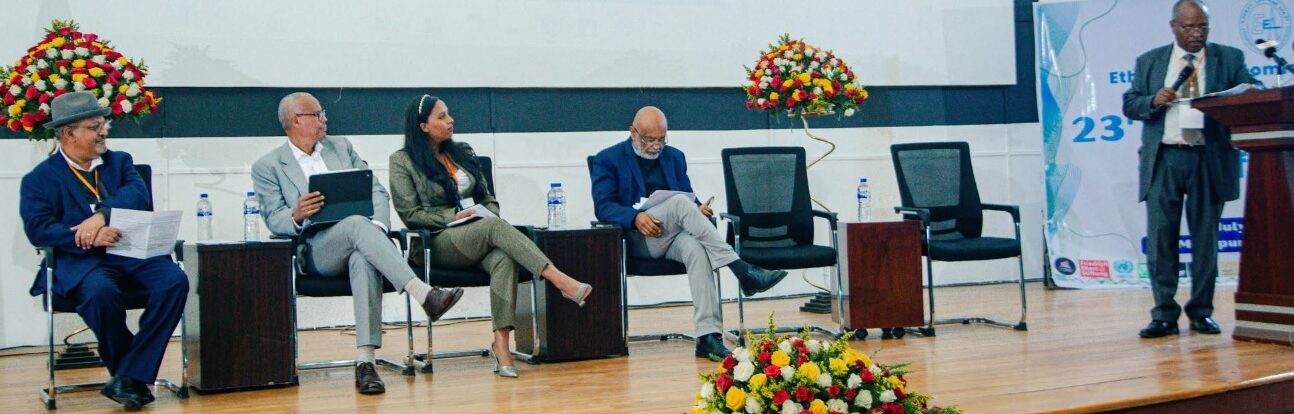
The conference also celebrated excellence in the economics profession by recognizing two distinguished scholars for their longstanding contributions. Professor Berhanu Nega received recognition for his outstanding contribution to the Ethiopian Economics Association, while Dr. Assefa Admassie was honored for his exceptional contributions to economics teaching and research.
As a co-organizer of the conference, IFPRI made a significant contribution through both plenary and parallel sessions, showcasing research that addressed some of Ethiopia's most pressing development challenges. Presentations covered a wide range of topics, including national transformation pathways, poverty dynamics, data quality, conflict and agrifood systems, social cohesion, indigenous vegetables and food security, and Ethiopia's development history.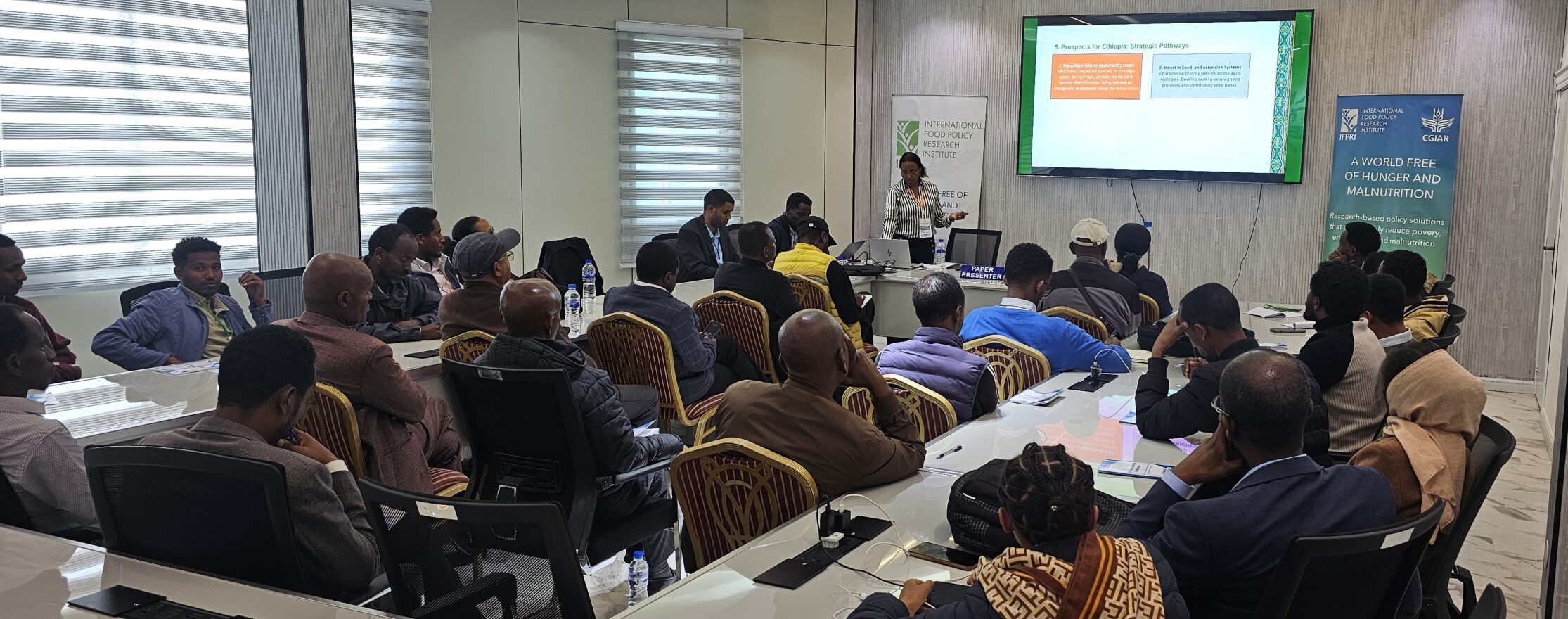
The papers presented by IFPRI researchers included:
- Rethinnking Ethiopia's Development: Toward a Theory of National Transformation – Taddese Zerfu, Ph.D.
- Does Survey Duration Affect Data Quality? Evidence from survey responses – Ashiber Tsegaye
- Poverty changes in rural Ethiopia: A Decomposition Analysis– Haleluya Tesfaye
- Armed Conflict and the dynamics of engagement in agrifood systems in ethiopia – Meseret Wondale
- Can Participatory Community-Based Targeting Improve Trust and Social Cohesion? – Halefom Yigzaw Nigus
- Contribution of African Indigenous Vegetables to Food Security and Livelihoods: Lessons from Kenya and Prospects for Ethiopia – Sindu W. Kebede
- When Did the Modern Development History of Ethiopia Start? – Shiferaw Bekele (Addis Ababa University)
The conference once again demonstrated the Ethiopian Economics Association's important role in fostering dialogue between researchers and decision-makers while reinforcing the value of collaborative research partnerships. Through its active participation and research contributions, IFPRI reaffirmed its commitment to generating high-quality evidence that informs policies and supports Ethiopia's journey toward resilient, inclusive, and sustainable development.