Ethiopia Policy Innovation Hub – Launch and Policy Dialogue
March 11, 2026. Skylight Hotel. Addis Ababa, Ethiopia
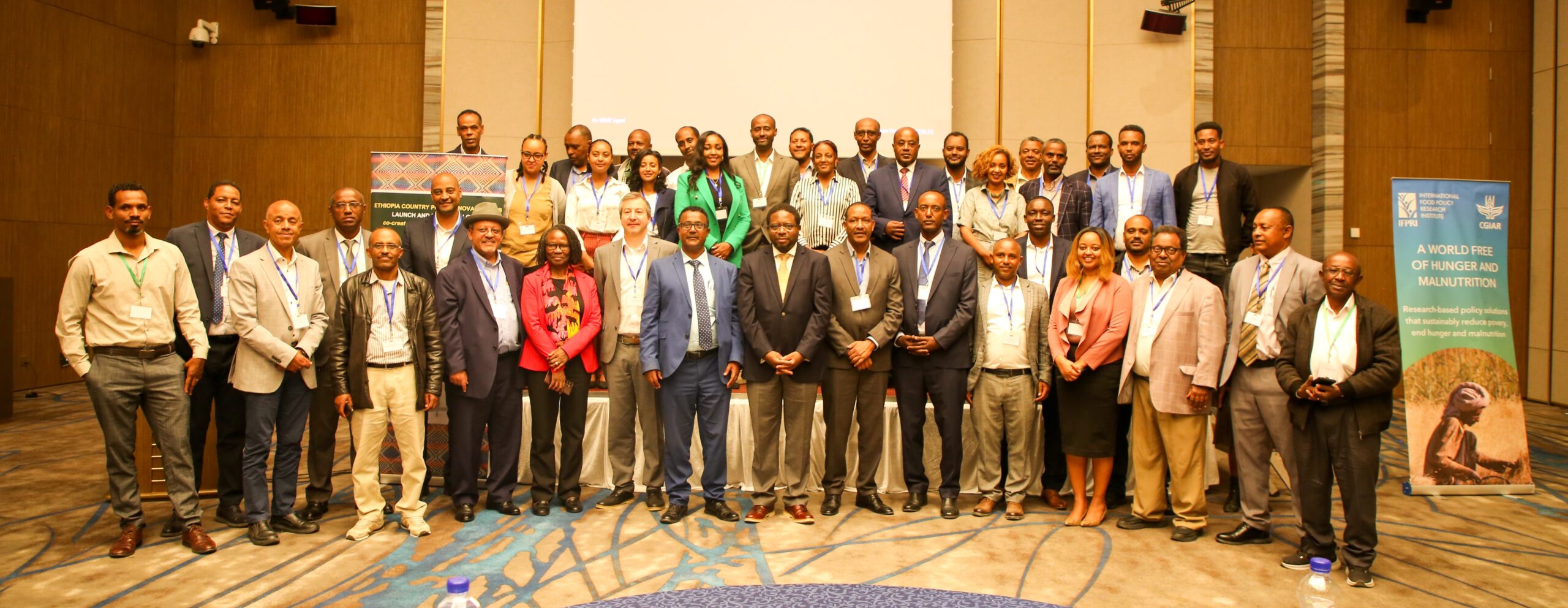
With the participation of 56 representatives from development partners, government institutions, and the private sector, the Ethiopia Policy Innovation Hub was officially launched on March 11, 2026, at the Skylight Hotel in Addis Ababa. The event was held under the theme “Evidence-Led Solutions for Ethiopia’s Rural Transformation Challenges.”
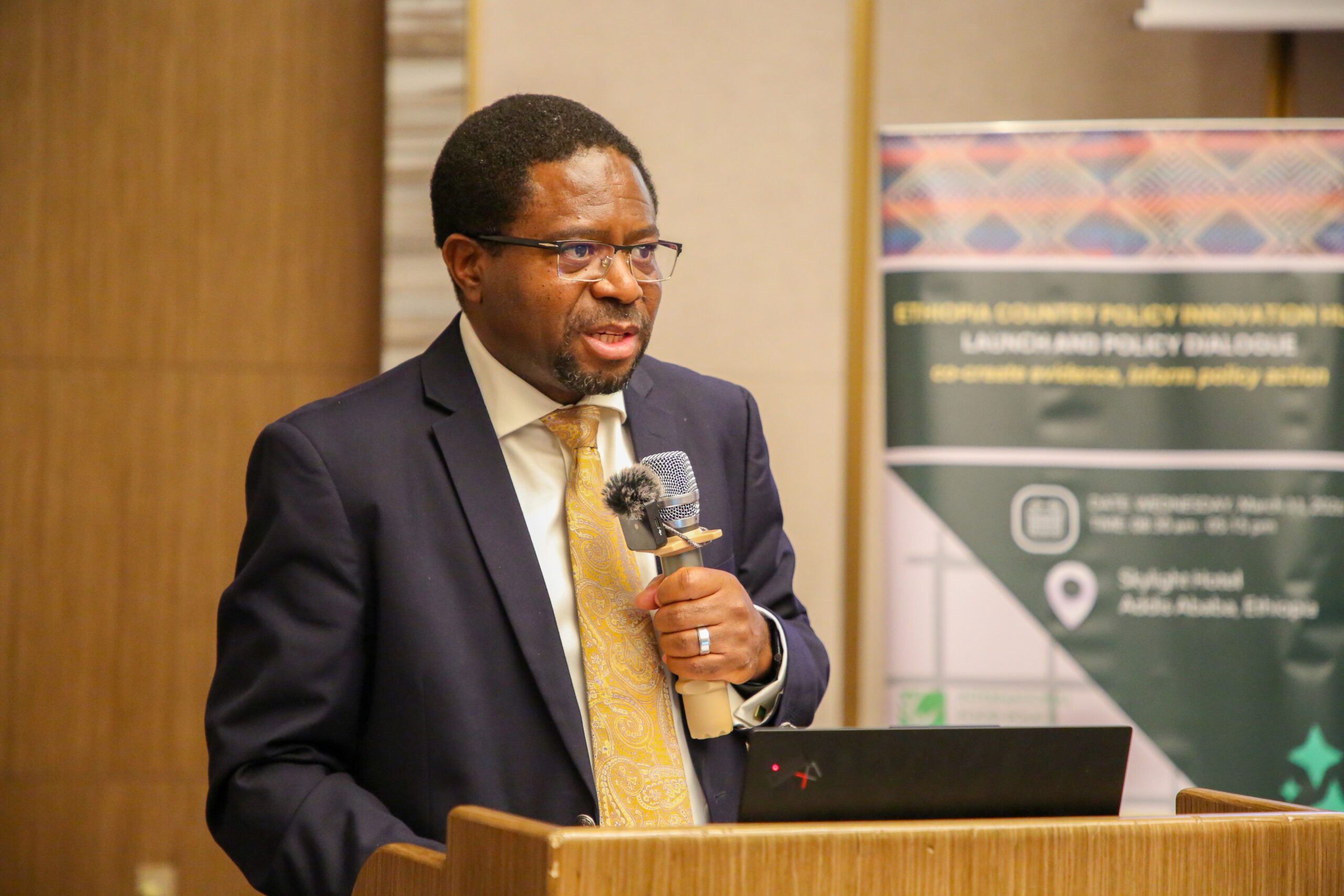
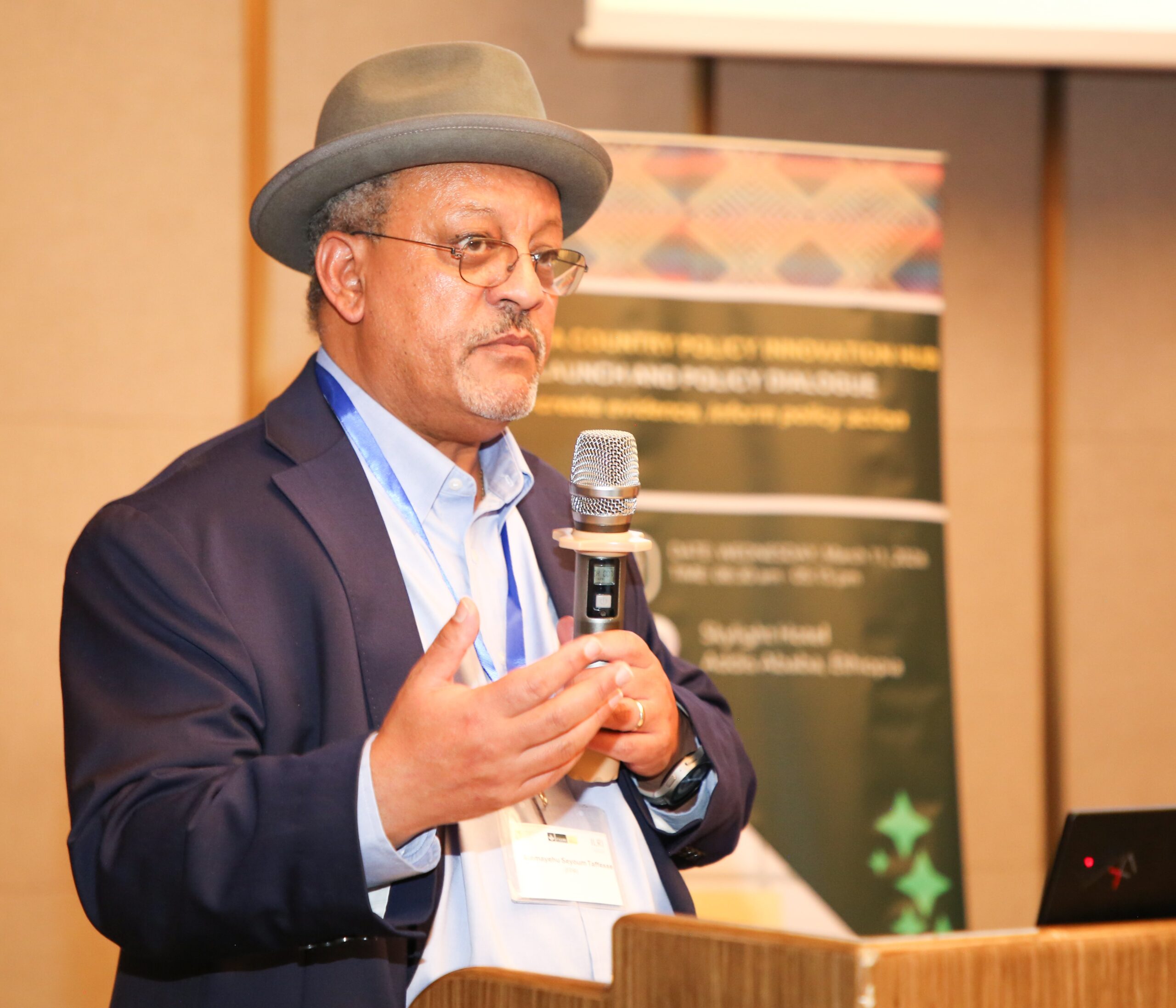 The conference opened with a warm welcoming remarks from Alemayehu Seyoum Taffesse (DPhil), Senior Research Fellow and Program Leader of IFPRI–Ethiopia. This was followed by an address from Professor Appolinaire Djikeng, Director General of ILRI. he noted: “Going from a project to an initiative takes vision—and a responsibility to continue that vision. By working together, we can support sustainable development, reduce poverty, and strengthen food and water security”
Additional opening remarks were delivered virtually by Professor Joachim Swinnen, Director General of IFPRI. Dr. Swinnen highlighted how IFPRI is helping to launch five hubs under the CGIAR Science Program in Ethiopia, India, Kenya, Malawi, and Nigeria. He discussed how the hubs will connect CGIAR’s global research with national systems to strengthen collaboration, build local analytical capacity, and advance pro-poor evidence-based policies, helping to advance the whole 2025-30 Research Portfolio.
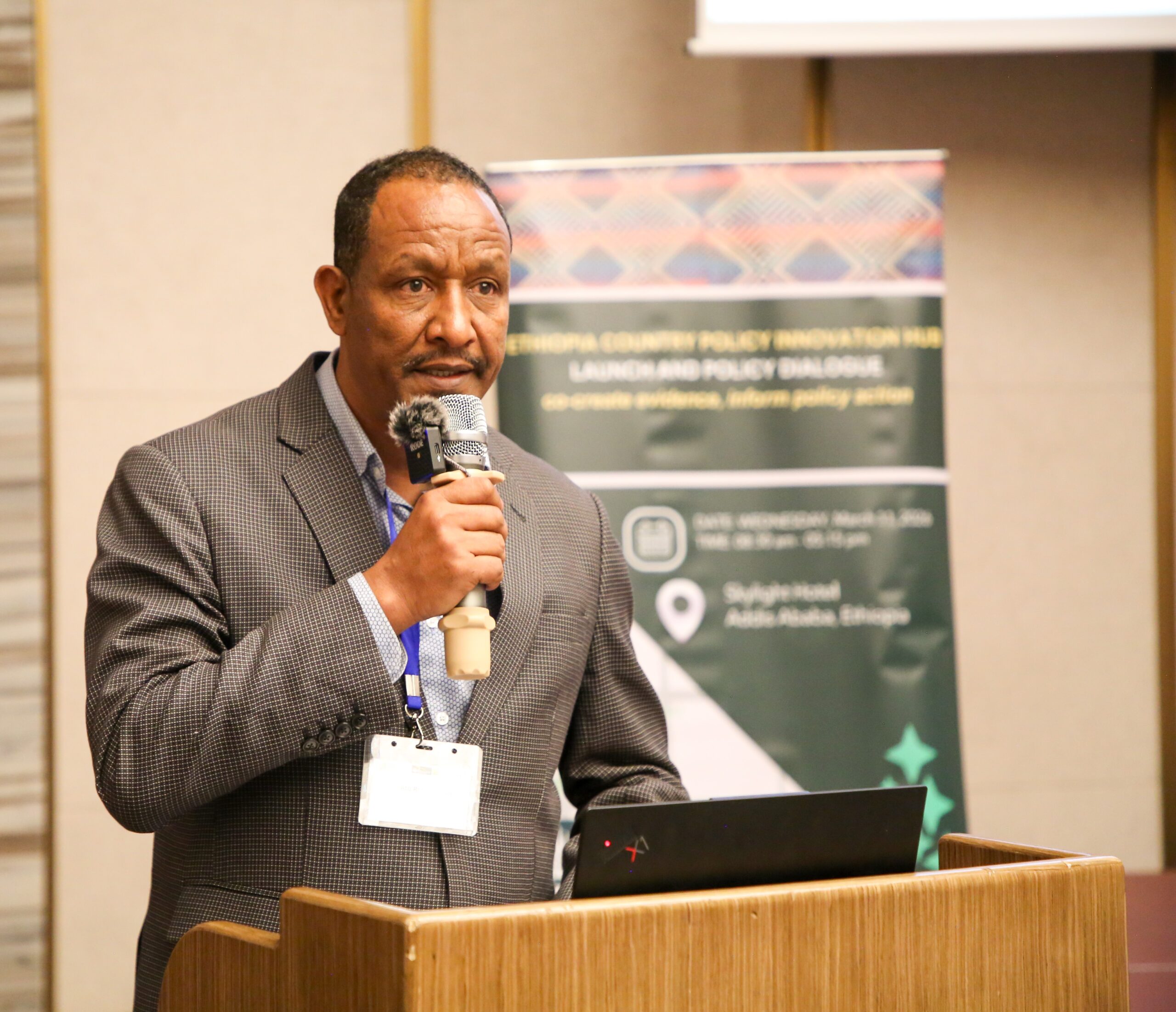 Dr. Mandefro Nigussie, CEO of the Ethiopian Agricultural Transformation Institute (ATI), represented by Mr. Reta Wegary to give the last opening remarks. Mr. Reta congratulated the organizers and highlighted the long-standing collaboration between ATI and the CGIAR since 2010. He emphasized that ATI–CGIAR partnerships, particularly with IFPRI, have played an important role in generating evidence to guide agrifood system transformation with minimal environmental impact. He expressed hope that the Policy Innovation Hub will further strengthen joint research, capacity building, and knowledge-sharing efforts with national partners.
Morning Session Highlights
The morning session featured an introduction to the CGIAR Policy Innovation Science Program by Dr. Clemens Breisinger, Program Director. He explained that the Program focuses on generating evidence-based policies to advance poverty reduction, food and water security, and job creation. He outlined three pillars:
- Co-creating Policy Solutions to respond to geopolitical and geoeconomic challenges;
- Country Support, where Policy Innovation Hubs play a central role;
- Institutional Capacity Sharing at global, regional, and national levels.
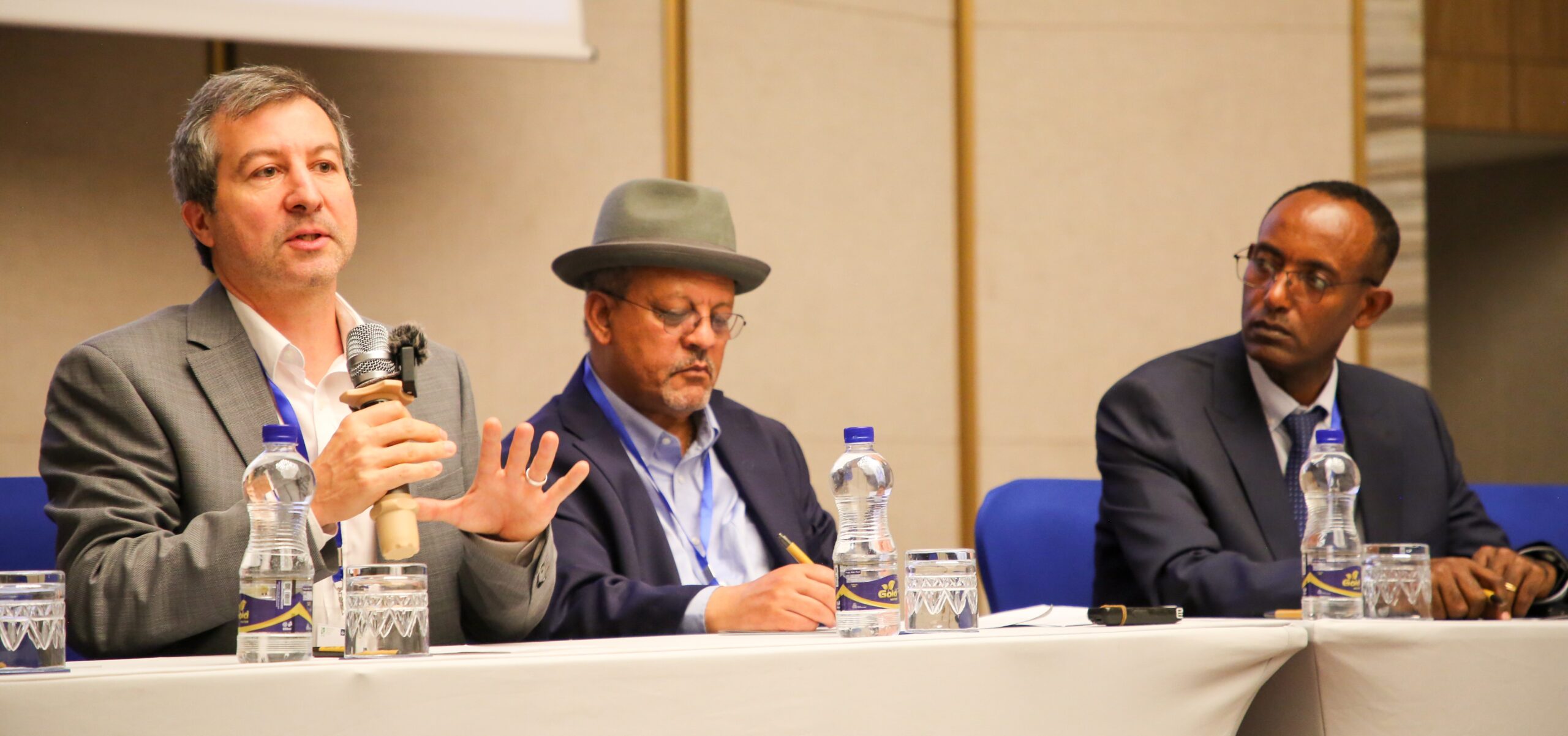
Dr. Breisinger noted: “The Policy Hubs are a one-stop shop for our partners to engage with CGIAR’s policy work. They create a mechanism for working with the whole of CGIAR, linking science with policy more effectively.”
This was followed by an introduction to the Ethiopia Policy Innovation Hub by Dr. Getachew Feye, Scientist, ILRI, and presentations from managers of Areas of Work (AoW) 1, 2, 3, 4, and 6.
Areas of Work (AoW) Overview
AoW 1: Foresight and Prioritization
Includes four workstreams:
- Using foresight and modeling to inform development plans and climate policies;
- Supporting ministries in policy evaluation and budget prioritization;
- Responding to short-term requests for crisis-related policy analysis;
- Providing training and disseminating modeling tools.
AoW 2: Market-Led Food System Transformation
Aims to enable inclusive, efficient, and resilient market-led transformation through policies, institutions, and technological innovations.
AoW 3: Political Economy & Governance
Focuses on improving global food systems governance amid geopolitical instability, strengthening policy coherence, and enhancing institutional coordination.
AoW 4: Water–Energy–Food–Environment Nexus Policy
Work priorities include:
- Evidence generation—water availability assessments, groundwater quantification, and policy recommendations for conjunctive water use in smallholder irrigation;
- Capacity sharing—training local experts on water assessments and management approaches;
- Stakeholder engagement—national policy dialogues across water, energy, food, and environment sectors.
AoW 6: Social Policies and Employment/Jobs
Key areas:
- Social protection and graduation programs—targeting, innovative financing, and enabling environments for cash transfer policies;
- Youth job creation in agrifood systems—identifying constraints and improving the targeting of youth programs;
- Institutional capacity strengthening—training partners on monitoring and impact evaluation.
Afternoon Sessions
The first afternoon session featured a panel discussion in which panelists identified three critical policy-relevant evidence gaps that constrain the implementation of Ethiopia’s food system transformation and nutrition agenda for 2026–28.
Panelists included:
- Dr. Getachew Diriba, MoA
- Mrs. Sentayehu Demissie, MoA
- Dr. Sisay Sinamo, MoH
- Ato Tsadkan Alemayehu, MoPD
- Mr. Reta Wagari, ATI
Participants then ranked the evidence gaps using a color-coded system aligned with their institutional roles.
The ranking result is represented as follows:
The pie chart illustrates the distribution of evidence gaps grouped into six broad categories derived from expert assessments. Initially, individual gaps were identified and ranked by experts on a scale from 1 (highest priority) to 15 (lowest priority). These gaps were subsequently organized into thematic categories as follows:
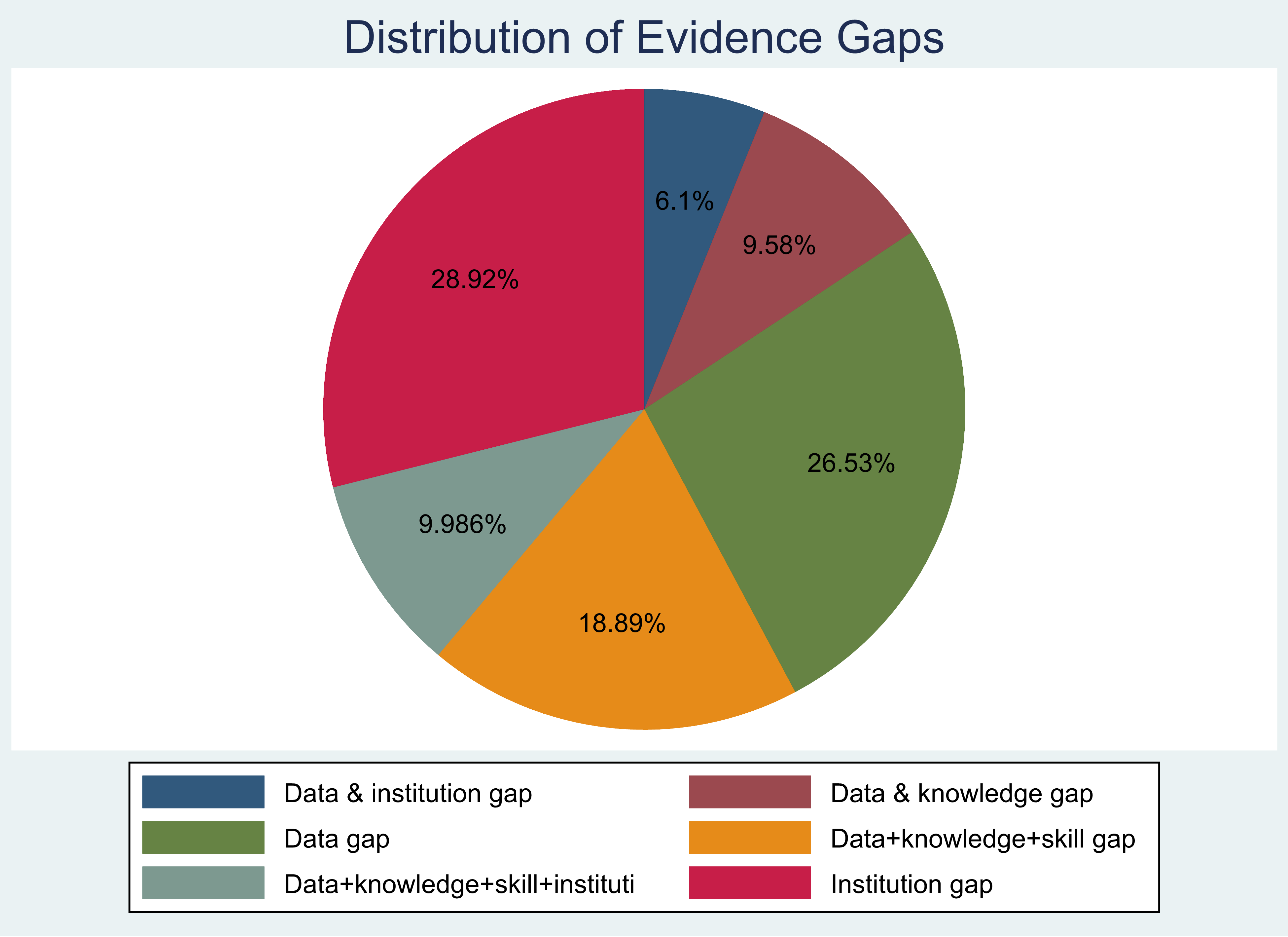
- Data gaps: limitations in household-level data, time series data, timely/recent data, and disaggregated data
- Data and knowledge gaps: insufficient evidence on beneficiaries and limited understanding of available resources
- Data, knowledge, and skill gaps: challenges related to scaling interventions and identifying what works effectively and cost-efficiently
- Institutional gaps: weaknesses in targeting systems, governance, land use planning, and agricultural systems
- Data and institutional gaps: constraints related to digitalization
- Implementation capacity gaps: issues related to coordination and implementation capacity
To enable aggregation, the ranking scores were reversed and then summed within each category to produce total scores. Higher total scores reflect greater overall importance, capturing both the frequency with which gaps were identified and their relative priority as assigned by experts.
The ranking results show that institutional gaps account for the largest share, indicating that challenges related to governance, coordination, and system-level implementation are the most critical constraints. This is followed by data gaps, highlighting the continued importance of improving the availability, quality, and timeliness of data. Data, knowledge, and skill gaps also represent a substantial portion, suggesting that beyond data availability, there are significant challenges in translating evidence into scalable and cost-effective interventions. In contrast, data and knowledge gaps, implementation capacity, and data and institutional gaps contribute to smaller shares, though they remain important components of the overall evidence gap landscape. Overall, the ranking suggests that while strengthening data systems is essential, addressing institutional and implementation challenges is key to improving policy effectiveness.
The second session hosted a panel discussion on how the CGIAR and the Ethiopia Country Policy Innovation Hub can help address these evidence gaps and strengthen evidence-informed policymaking, as well as priority areas for 2026–28.
Panelists included: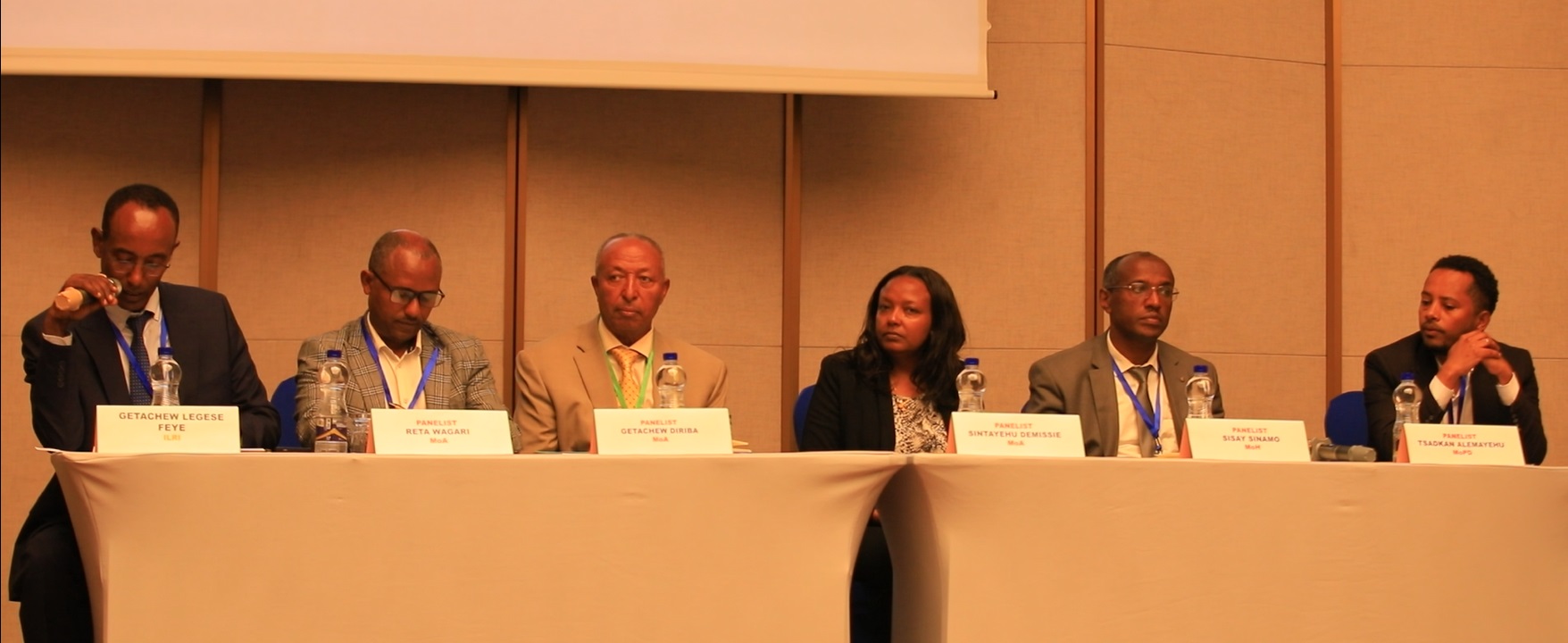
- Professor Negussie Dachassa, EIAR
- W/ro Tsigereda Fekadu, MoA
- Dr. Namukolo Covic, ILRI
- Dr. Dawit Alemu, Wageningen Research
- Dr. Tewodros Mekonnen, IGC
- Professor Abebe Shimeles, MoF
The meeting adjourned at 4:30 PM.