Validation Workshop. March 12, 2026. ILRI Campus, Addis Ababa, Ethiopia.
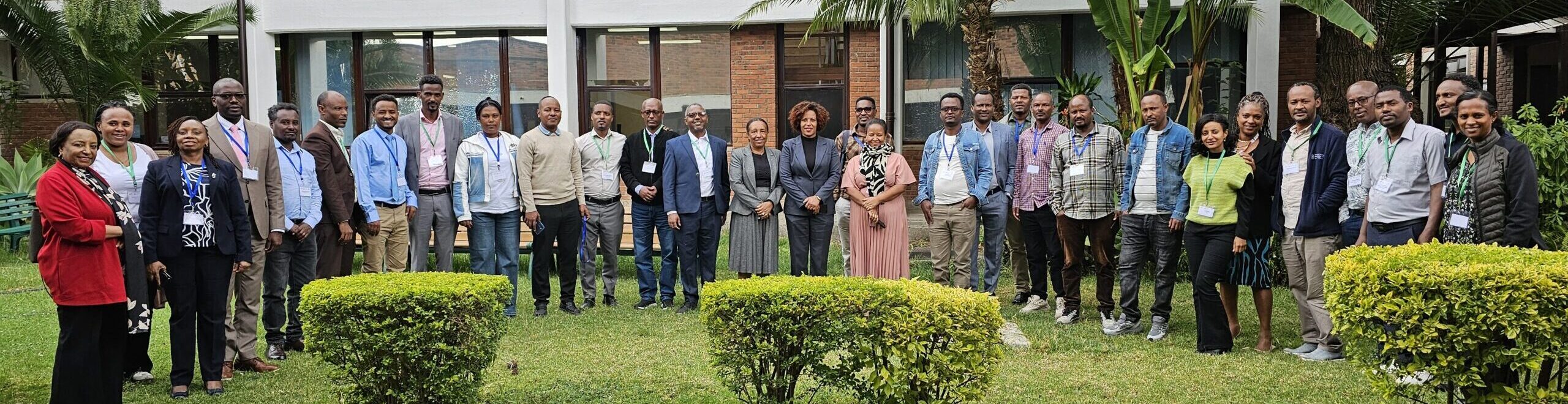
On March 12, 2026, more than 40 participants from government institutions, development partners, and research organizations convened at the ILRI campus in Addis Ababa for a one-day conference focused on strengthening evidence generation for Ethiopia’s Home-Grown School Feeding Programme (HGSFP). The event provided a platform for dialogue, knowledge sharing, and collaboration to enhance the cost-effectiveness, sustainability, and inclusiveness of school feeding initiatives in the country.
The workshop opened with welcoming remarks by Dr. Alemayehu Seyoum Taffesse, Senior Research Fellow and Program Leader at IFPRI-Ethiopia. He emphasized the importance of generating robust evidence to support Ethiopia’s home-grown school feeding programme, particularly in improving its cost-effectiveness and long-term sustainability.
This was followed by opening remarks from Dr. Yohannes Wogasso, Director General of School Improvement at Ethiopia’s Ministry of Education. He highlighted the government’s commitment to school feeding through the Ethiopian School Feeding Policy Framework, which envisions universal coverage of all pre-primary and primary school children by 2030—ensuring that every child receives at least one meal per school day. He stressed that while different implementation strategies may be required across contexts, strong empirical evidence is critical to identifying the most effective, efficient, and locally appropriate approaches.
Professor Jane Mariara, Executive Director of the Partnership for Economic Policy (PEP), introduced PEP’s approach to linking high-quality research with policy impact. She underscored the importance of co-creation—bringing researchers and policymakers together to ensure that research addresses real policy needs. She noted that the ongoing project aims to generate actionable evidence to improve the cost-effectiveness, sustainability, and inclusiveness of Ethiopia’s home-grown school feeding programme, particularly in food procurement systems and value chains. The initiative is supported by multiple partners, including IFPRI and the World Food Programme (WFP), with funding from the International Development Research Centre (IDRC).
Joining virtually, Edidah L. Ampaire, Senior Programme Specialist at IDRC, provided an overview of the CRISP initiative. She highlighted the project’s focus on understanding how school feeding programmes connect with local food systems and how procurement systems can be made more resilient, inclusive, and sustainable. She also noted Ethiopia’s strong policy environment as a key enabler for translating research findings into practical action and impact.
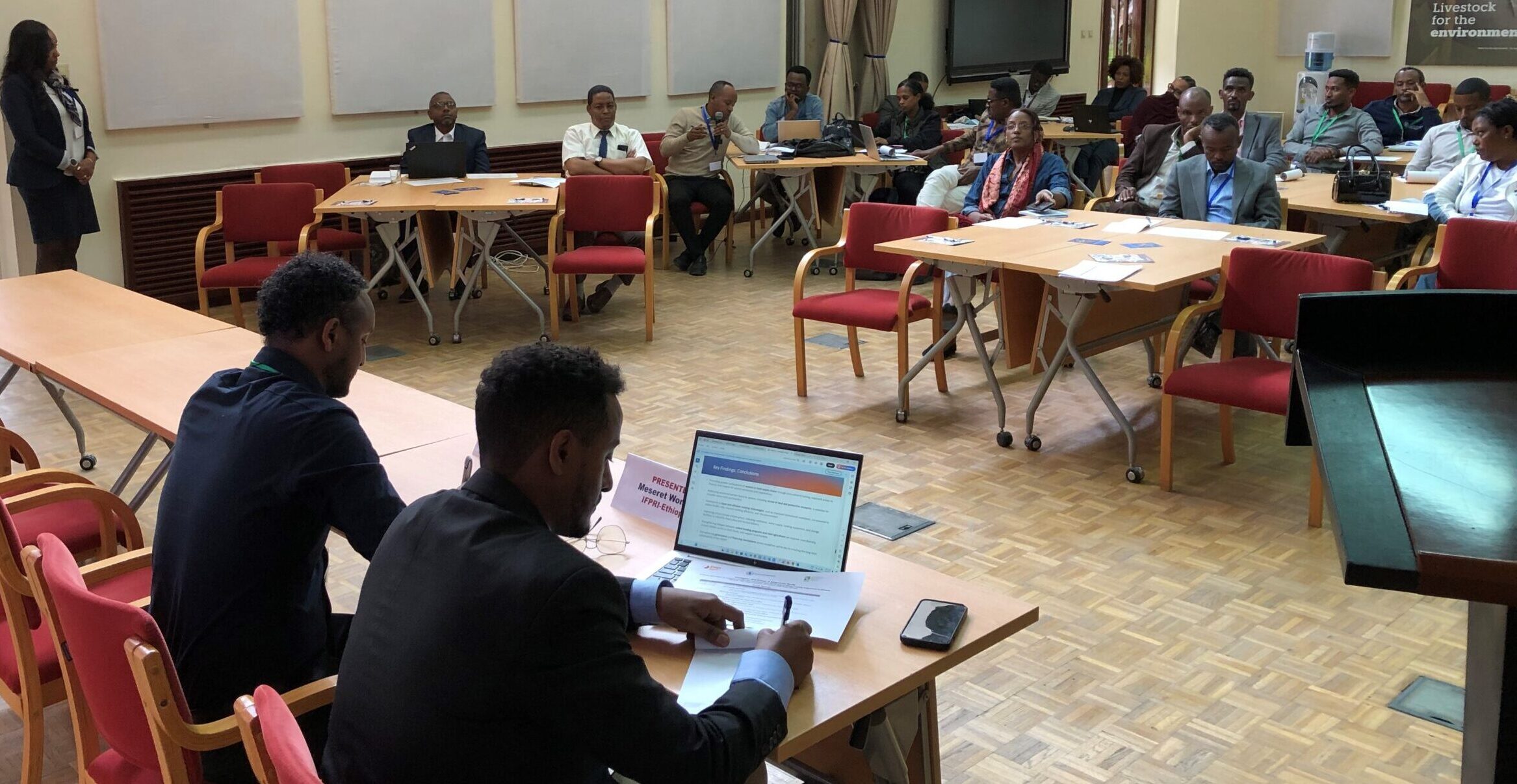
Dr. Halefom Nigus, Research Fellow at IFPRI, presented an overview of the project and shared findings from the diagnostic analysis. His presentation sparked significant engagement, with participants actively contributing questions and insights during the discussion session.
Home-Grown School Feeding Programmes are increasingly recognized as powerful tools not only for addressing child nutrition and improving educational outcomes but also for driving broader socio-economic development. By linking school feeding with local agricultural systems, these programmes support smallholder farmers, strengthen food value chains, and stimulate local economies. In Ethiopia, school feeding programmes began in 1994 as emergency interventions in food-insecure regions and have since evolved into a key national strategy.
Today, Ethiopia implements multiple HGSFP delivery models. However, despite their growing importance, there remains limited systematic evidence on the different procurement and delivery approaches. The programme aims to reach full coverage of pre-primary and primary school children by 2030. This project seeks to fill critical evidence gaps by identifying effective, scalable, and context-specific solutions.
The conference also featured a panel discussion on “Navigating the Complexities and Strengthening HGSFP Implementation,” with contributions from experts representing IFPRI, WFP, and the Ethiopian Public Health Institute (EPHI). The discussion highlighted practical challenges and opportunities in implementing school feeding programmes across diverse contexts.
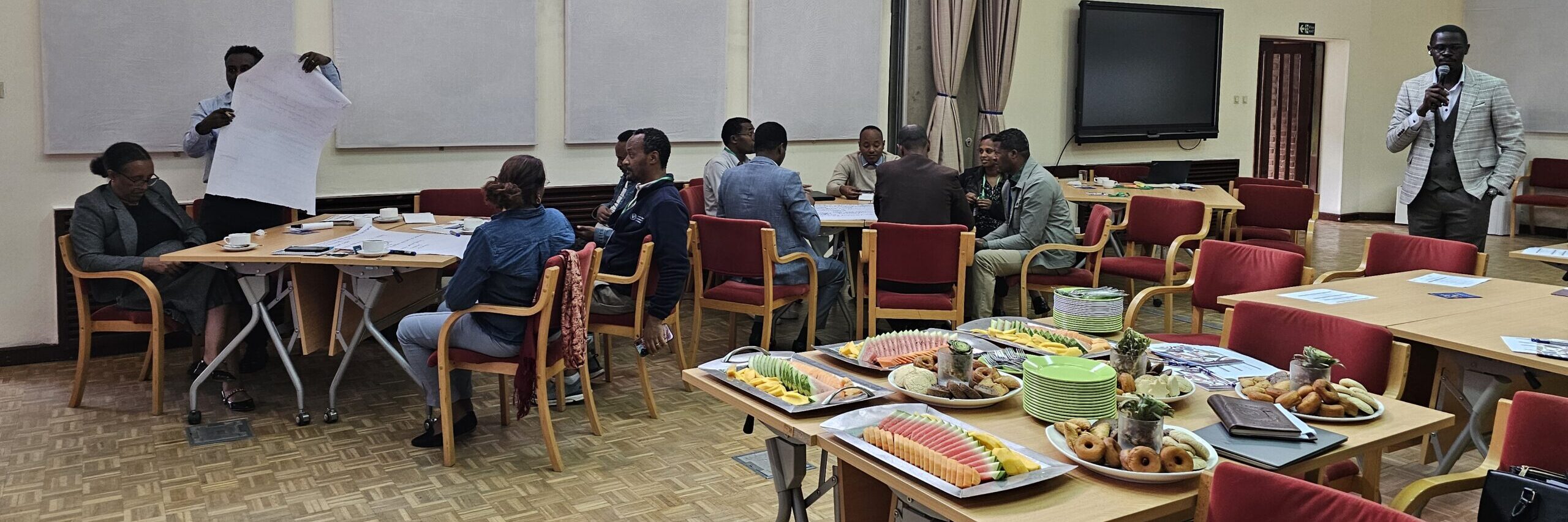
In the afternoon, participants engaged in interactive group work sessions to identify priority intervention areas. Discussions focused on four key themes: Procurement and Local Sourcing; Clean Cooking and Infrastructure; Gender and Value Chain Inclusion; and Financing and Sustainability. These sessions provided valuable insights and diverse perspectives to inform the next phase of the project.
The event also included a virtual presentation by Dr. Eleni Yitbarek, Associate Professor at the University of Pretoria, who outlined approaches for refining intervention pathways based on diagnostic findings and highlighted the next steps for the research.
The conference concluded at 4:30 PM with closing remarks from Askale Teklu of the World Food Programme and Dr. Aulo Gelli of IFPRI, who joined virtually. Both emphasized the importance of continued collaboration and evidence-driven decision-making to strengthen Ethiopia’s home-grown school feeding programme.
Overall, the conference provided a valuable opportunity to bring together diverse stakeholders, exchange ideas, and build a shared understanding of how evidence can inform more effective and sustainable school feeding programmes in Ethiopia.