IFPRI-Ethiopia Hosts Half-Day Seminar on Food Systems Transformation
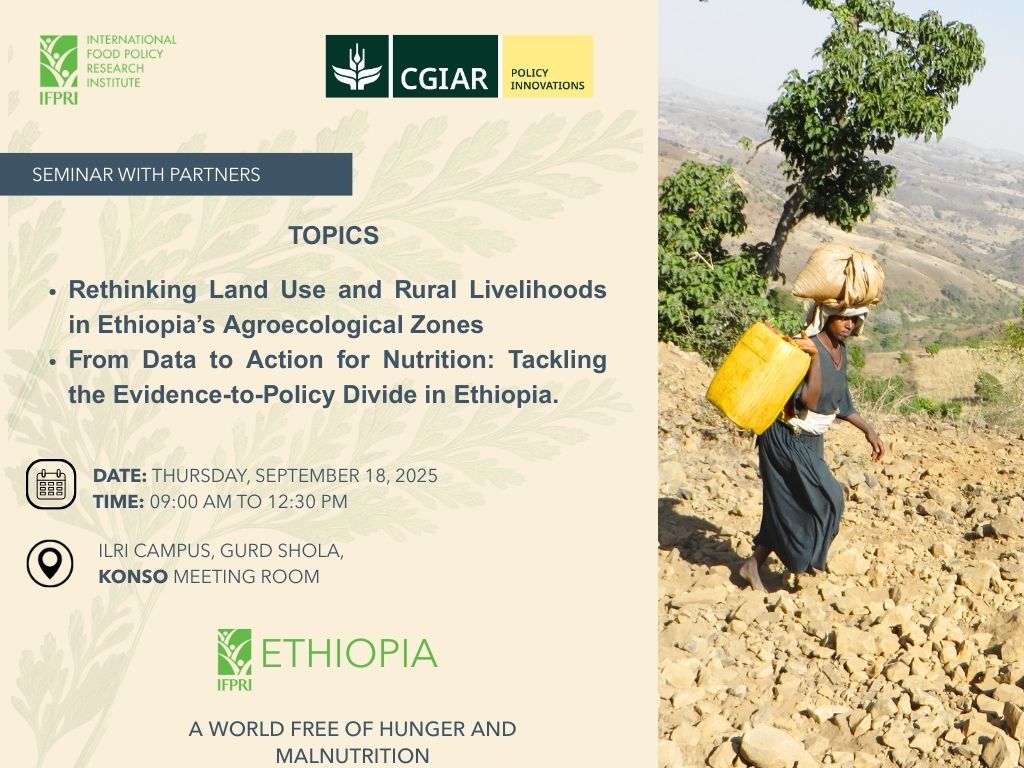
On September 18, 2025, IFPRI-Ethiopia convened a half-day seminar at the ILRI Campus in Addis Ababa, bringing together partners and representatives from the U.S. Embassy, USDA, EU-Ethiopia, Ministry of Agriculture (MoA), Ministry of Finance (MoF), Ethiopian Public Health Institute (EPHI), Ministry of Health (MoH), PSI, Addis Ababa University, and other key stakeholders.
Setting the Stage
The seminar opened with welcoming remarks from Dr. Steven Were Omamo, Unit Director of IFPRI’s Development Strategy and Governance Division. He emphasized that food lies at the heart of national transformation, influencing not only health, education, and employment, but also trade, stability, and economic growth.
“Food systems are not only about farming and markets—they are about livelihoods, nutrition, and well-being,” he noted. Dr. Omamo underscored the urgency of evidence-based food policy research in addressing Ethiopia’s complex challenges: recovering from conflict, adapting to climate change, stabilizing the economy, meeting the needs of a growing population, and ensuring no community is left behind.
Knowledge Sharing
Two research presentations followed:
- Dr. Alemayehu Seyoum Taffesse, Senior Research Fellow and Program Leader at IFPRI-Ethiopia, shared insights on “Rethinking Land Use and Rural Livelihoods in Ethiopia’s Agroecological Zones.”
- Dr. Taddese Alemu Zerfu, Senior Research Fellow at IFPRI-Ethiopia, presented on “From Data to Action for Nutrition: Tackling the Evidence-to-Policy Divide in Ethiopia.”
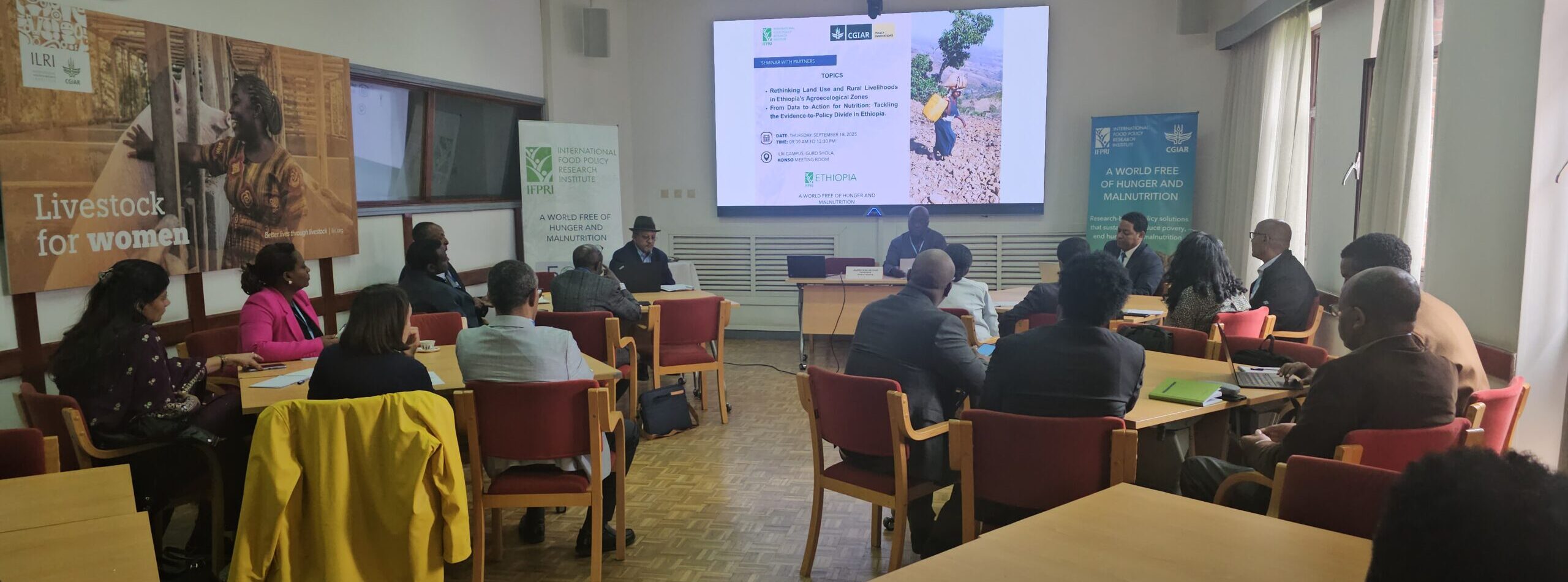
Participants engaged in a candid discussion about bridging the gap between research and policymaking. Policymakers voiced concerns about the volume of lengthy reports, while researchers highlighted efforts to produce concise policy briefs, tailored booklets, and informal consultations to ensure evidence meets decision-makers’ needs. The role of media in amplifying research was also emphasized.
Panel Reflections
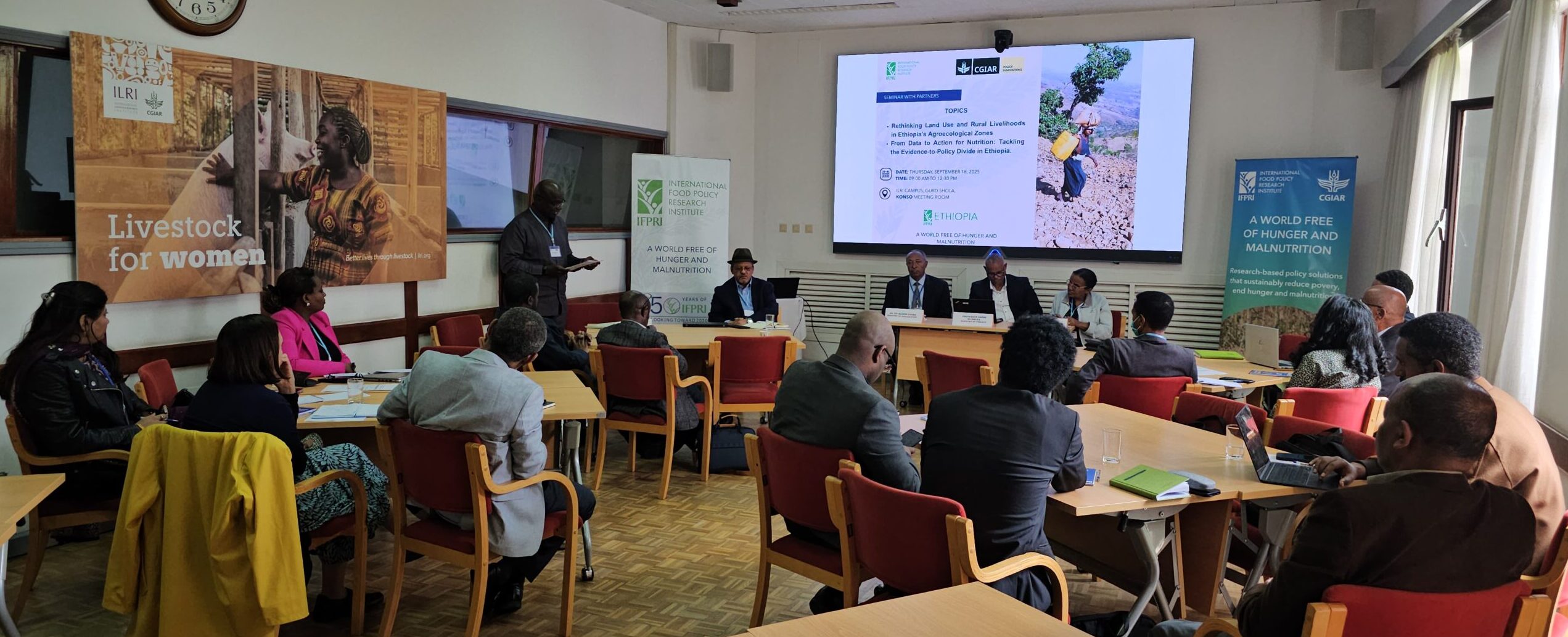
The second half of the seminar featured a panel discussion with:
- Dr. Getachew Diriba, Ministry of Agriculture
- Professor Abebe Shimeles, Ministry of Finance
- Dr. Aregash Samule, Ethiopian Public Health Institute
Dr. Alemayehu introduced the Ethiopia Strategy Support Program (ESSP), National Information Platform for Nutrition (NIPN), and IFPRI’s ongoing projects, which aim to:
- Co-generate applied policy research to fill knowledge gaps in agriculture and rural development,
- Strengthen the capacity of Ethiopian research institutions, and
- Build an integrated knowledge support system for policy analysis across federal and regional levels.
Key Insights from the Panel
- Dr. Getachew called for critical reflection on why institutions in Ethiopia often fail to address challenges of nutrition and hunger, stressing the importance of technology, sociology and financing agriculture and fostering stronger researcher–policymaker collaboration. Ethiopian Food system offers a monthly dialogue platform to bring the policy makers, researchers and practitioners together.
- Professor Abebe highlighted the need for trust-building between experts and government to enhance the value of research for policymaking.
- Dr. Aregash emphasized NIPN’s role in responding to government requests and encouraged early involvement of policymakers in the research process.
Representatives from development partners also shared reflections. Zemen from the U.S. Embassy praised IFPRI for convening the dialogue and raised institutional failures as a key issue for future focus. Mercedes from the EU-Ethiopia noted the strong willingness of change in transforming Ethiopia and stressed the importance of funding the researching entities and connecting research to implementation.
Closing Reflections
In his closing remarks, Dr. Omamo described the seminar as an “inspiring dialogue,” underlining the need for continuous—not occasional—exchanges between researchers, policymakers, and practitioners. He emphasized that:
- Evidence must be translated into action, and action should, in turn, generate new evidence,
- Knowledge supply and demand must be better linked,
- Food systems transformation requires attention to technology, finance, sociology, land use, and data, and
- Building a trust-based community of practice is essential for progress.
He thanked all participants for their active engagement and reaffirmed IFPRI-Ethiopia’s commitment to future partnerships that advance inclusive and sustainable food systems transformation.