By John Hoddinott, Derek Headey and Mekdim Dereje
In brief
Household cow ownership in rural Ethiopia is critical for income and nutritional purposes, especially amongst young children. However, cow ownership alone does not solely have dietary impacts. By investigating access to local markets as potential substitutes to cow ownership, we discover some important results pertaining to these perishable milk products.
Study Set-Up
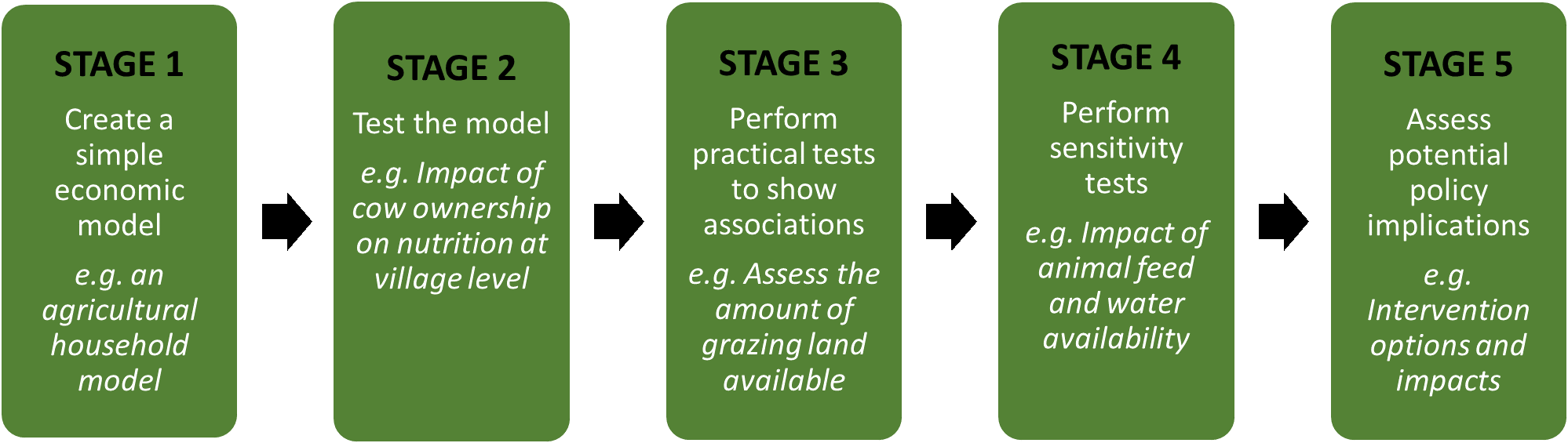
In rural communities, cattle signify wealth and insurance, as well as a dominant source of dairy products and meat. The nutritional value of milk cannot be understated, yet within Ethiopia, the milk sector yields a fraction of its potential. To establish understanding of the complex relationship between cows and malnutrition, we drew data from Ethiopia’s Agricultural Growth Program (AGP) from the four regions in the Ethiopian Highlands. The number of households sampled was 7,930. We took a 5-staged approach:
Key Findings
- Cow ownership increases milk consumption and linear growth of young children well beyond estimated impacts
- Large reductions (6-10%) in the probability of stunted growth in children
- Village cow ownership positively affects milk consumption and linear growth, even if the household ownership is marginal
- Market access, whether formal or informal, helps develop markets to support children’s milk consumption and growth trajectories
Policy Implications
Chronically undernourished children are less likely to perform well in school and likely to be less economically productive as adults. Therefore reducing chronic under-nutrition has high economic returns. Given the results of this study, we identify 3 possible classes of increasing intervention:
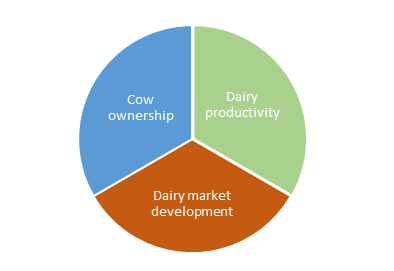
Each has varying degrees of sustainability with regard to their benefit in the resource-constrained Ethiopian highlands. Nevertheless, by improved productivity and marketing in the dairy sector and scaling up the livestock budget, these are likely to yield sustainable benefits both economically for farmers and nutritionally for children. At the same time though, attention should focus on technologies for reducing perishability and health risks of milk products in order to transform this essential source of child nutrition.
Read more in the Working paper 63 and Research note 28